

Written and copyrighted* by: John H. Ramsey, Founder The Bill of Financial Responsibilities® Project https://bofrusa.com
(Listen to this article at this YouTube link. Turn on “CC” closed captions.)
Opponents of an Article V Convention to Propose Amendments (AVC) have for years been promoting the argument that We The People dare not hold an AVC because it might become a runaway convention resulting in dangerous Amendments gutting our liberties undertaken by an undisciplined rabble with unchecked powers that will ruin our Constitution and our country.
Well, when you put it that way it doesn’t sound like a very good idea at all.
The chief architect and proponent of this fearmongering is the John Birch Society (hereinafter JBS or Birchers), an ultra-right fringe minority that claims we must fear change lest we get it wrong.
That argument is a red herring smokescreen advanced by those who don’t want changes of any kind to our Constitution, and certainly not from a gathering of regular folks from outside the beltway, not even if the changes come from elected representatives serving in the 99 legislative chambers in our 50 states.
No sir, no Constitutional Amendments unless they come from Congress, and maybe not even then. We The People cannot be entrusted with that kind of power, so goes the refrain.
 The problem is Congress won’t fix itself, even though their behavior and the fiscal mess they produce keep getting dangerously worse. Why is this? Congress is rife with conflicts of interest, ultra-partisanship, and is devoted to retaining its powers, and is therefore incapable of solving our fiscal problems.
Here is what needs fixing…our people and businesses send about $5.6 trillion to the federal government every year and there are no rules in our Constitution about what Congress, the Executive Branch, and the Judiciary may, must, or cannot do with it. None. No instructions or safeguards from the people to our Congress to require wise financial policy.
In short, We The People send Washington a $5.6 trillion blank check, each and every year. And that’s exactly the way Members of Congress want it. The problem is it doesn’t work very well at all.
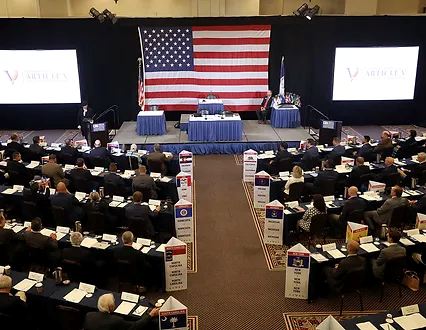
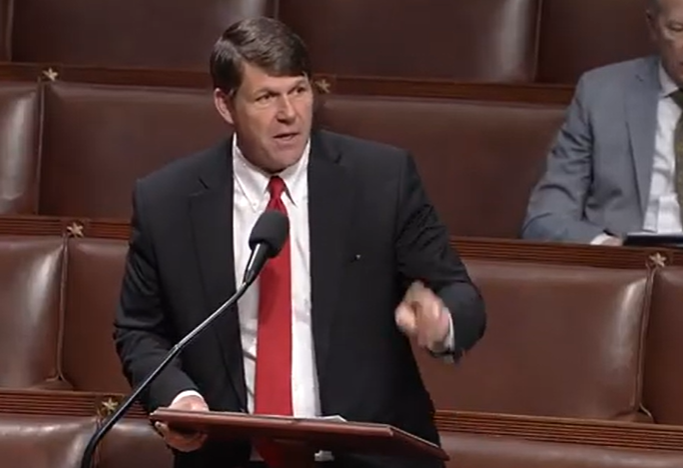
The good news is that Congress recently acknowledged receipt of a sufficient number of applications from the States requiring Congress to call an AVC. The bad news is House Speaker Mike Johnson recently reiterated his personal support for an AVC but his unwillingness to call it, no matter what the Constitutional requires, and challenged Article V supporters to sue him in federal court. The Senate so far has done nothing.
The court challenge would have to be initiated by one or more state attorneys general and so far none of them has stepped up, despite efforts by the citizen-led Federal Fiscal Sustainability Foundation https://ffsf.us urging them to do so.
The question for all of us, including the Birchers and their acolytes, is whether the threat of a runaway is so dire that we should watch our fiscal house collapse or whether We The People should use the Article V tool the Founders gave us and fix it.
 Not worth the risk, say the Birchers. It might run away and propose unintended bad things. Unfortunately for JBS and their disciples, history tells us otherwise. Writes noted author and conventions’ historian Michael W. Kapic…
- In the 250 years since our Declaration of Independence a total of 52 peoples’ conventions of states have been held as permitted in Article V and Article VII. Not one ran away.
- The States have applied over 700 times to Congress to accept their applications, and Congress has maliciously and unconstitutionally forbidden the States from exercising their constitutional rights to meet.
- America has held four non-Article V conventions that produced amendments that were never ratified (1814 Hartford, 1850 Nashville, 1861 Washington DC, & 1889 St. Louis). So an AVC was/is not the last word on the subject of amending our Constitution. It is ratification by the States that decides. An AVC does not have the authority to change or ratify anything without permission from the States.
History is clearly not on the side of JBS.
Let’s take a closer look. Webster says “runaway” means denoting something happening or done quickly, easily, or uncontrollably, e.g., the runaway success of the book.
Were an AVC to take place, it could never be said to have happened quickly or easily, since citizens groups have been trying to accomplish this for well over half a century.
So it must be the word “uncontrollably” that frightens the Birchers, which means something might happen at the AVC that was not anticipated in advance, or did not follow an agreed agenda.
Here the Birchers fail to mention three crucially important facts.
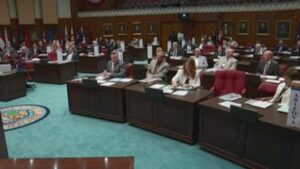 First, the AVC doesn’t amend anything. They recommend. They propose. And they do that after discussing, analyzing, negotiating, and voting for or against. In fact, scholars tell us that AVC delegates must be free to interact with one another, including negotiating, or it is not a convention. Most of us consider that set of activities to be the democratic process.
Second, the ratification process after the AVC is a very high bar. Proposed AVC amendments are sent back to the 50 States, and every component house of 3/4 of our States, that’s 38 States and possibly 76 legislative bodies, must vote to ratify, separately, each proposed amendment. Some States could decide whether or not to ratify by a referendum of their citizens, the purest form of our democracy.
Third, all this nationwide decision-making might possibly have to occur within a stated period, after which the proposed and yet unratified amendment(s) fail, as was the case with the equal rights amendment.
If, in a larger context, we are to heed the Birchers’ warning to avoid the occurrence of runaway outcomes in the conduct of our public affairs, then we invite members and supporters of the JBS to join with us and vigorously oppose…
- Runaway spending by our profligate Congress and by a succession of Presidents that sign such spending into law each year. Sometimes we bundle lots of spending in an aggregate bill and call it Big and Beautiful. That is what got us a national debt of $39 trillion and an annual deficit in this fiscal year expected to reach $1.9 trillion.
- Runaway legislation that satisfies short term appetites but creates huge unfunded liabilities for future generations of our citizens too young to vote when the obligations were created. The total of those unfunded liabilities has now reached $174 trillion and is continuing to grow. These liabilities are real. Some of them will come due within seven years of this writing. Conclusion: Our national government is insolvent. Even our Federal Government officials officially admit that.
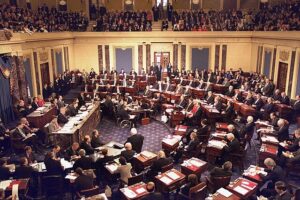 Runaway regulations, 175,000 pages of them, created and administered by unelected employees in federal departments and agencies that collectively cost our economy $2-3 trillion per year, more than the annual total Uncle Sam collects from all personal and corporate income taxes. A new report from the Competitive Enterprise Institute (CEI) states that there are 445 federal agencies with the legal authority to publish regulations. In fiscal year 2016 those agencies created 3,853 new federal regulations compared with only 214 laws passed by Congress and signed by the President.
- Runaway mismanagement of our federal trust funds including Social Security and Medicare, that has enabled Congress and the Executive Branch to misapply the $trillions of the payroll taxes we and our employers have paid into Social Security and Medicare (and into other federal trust funds) to pay other government bills, denying our citizens the benefit of decades of cumulative compound returns that could have accrued from prudent investment of those tax receipts over the 40 plus years of our working lives.
There is a solution to correct all of this. Considerable work to create the comprehensive federal government fiscal policy reform we need has been accomplished and is ready for consideration by delegates to the AVC if we can only get past the irrational objections and call it. The solution is entitled the Bill of Financial Responsibilities®, BOFR for short, https://bofrusa.com, a package of five common-sense amendments requiring Congress and all agencies of the federal government to exercise responsible financial management. It is only four pages long. Here is the text: https://bofrusa.com/bill-of-financial-responsibilities/
The time has come and the bill is past due. The question before us is whether We The People will step up and utilize the opportunities the Founders gave us in Article V of our Constitution and right the behavior of our runaway federal government, before our untreated insolvency tightens its inevitable grip and opportunities to fix it…run away.
———————–
*For more articles by Mr. Ramsey and information on The Bill of Financial Responsibilities® Project please see https://bofrusa.com. Mr. Ramsey explicitly grants permission to copy and share this essay widely with others, as written, with attribution and reference to the Bill of Financial Responsibilities Project.





Leave A Comment