
By Mike Kapic – January 31, 2026
Summary
The convention process that created the U.S. government had been in use for 170 years prior to 1787, utilizing a well developed and established standard operating process. The many recorded events have been analyzed by scholars and historians. The process has proven itself safe and legal and when all else failed, it was historically the go-to solution for America.
False assertions against the Constitution’s Article V convention clause claimed by those without historical knowledge are considered constitutional mysticism. The records prove they lack any knowledge of this little-known but factual history.
***
How does a cos or convention of states work?
The following comes from hundreds of actual convention records over the centuries using their well-established Standard Operating Procedures. This SOP is how the next convention will operate whether or not the states meet for an Article V convention or for some other reason. Regional or national. When a state calls its peers to join, the reason for meeting is stated in the hosts invitation. See the Arizona Call for Delegates invitation. The states authorize themselves to call a convention such as Arizona did in 2017: HCR2022
After the states fulfill the Article V threshold for applications, the Constitution requires that Congress shall announce the call that the states are meeting in convention. The host State then sends a circular letter of invitation to the several states to meet noting the subject of the gathering, and the place and date of the convention.
State legislatures select their attending delegates and instruct and commission them. The established SOP precedence of the number of delegates is open as each state has only one vote.
The host state takes on the responsibility of organizing the invitation and startup of the convention including acting as the temporary leaders with temporary rules. After opening the convention doors, the host state reviews credentials of attending state delegates followed by the election of convention officers.
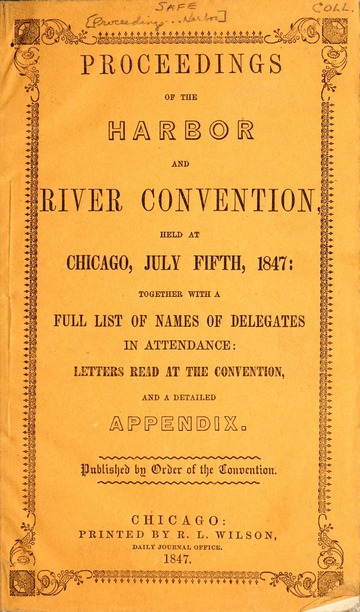 Credential example:
1847 Chicago, “A Committee of one from each State and Territory (to be designated by the Delegation,) shall be appointed to report to the Convention, officers for its government, rules for its conduct, and the order of its business.”
The convention will then consider committees, such as Rules, Detail, Correspondence, Style, etc. Some conventions have been held in secret, some not, the decision would come from the States convention delegates.
As an example of a recent convention, here’s a four-minute overview video of the Phoenix BBA Planning Convention of States held in September of 2017.
In America the first recorded event was onboard the Mayflower in 1620 as the group amended their compact with the Virginia Company explaining the reasons for modifying their patent instructions due to being blown off course.
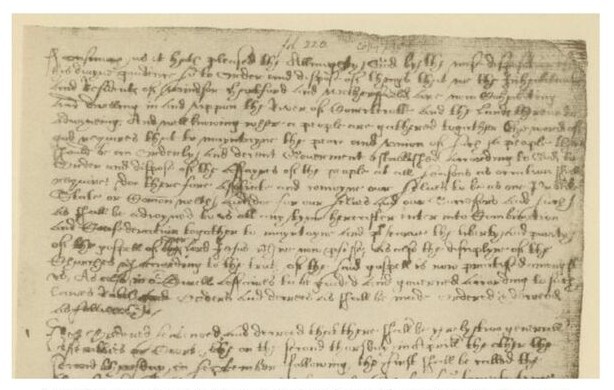
Excerpt of the 1639 Hartford convention record forming The Fundamental Orders of Connecticut.
The Hartford convention of 1639 self-formalized a small community, unburdened by the Crown or company patents. They united free of religious persecution and convened the first self-governance convention to produce a constitution. Led by Reverend Thomas Hooker with the words, “The foundation of authority is laid firstly in the free consent of people” thus forming The Fundamental Orders of Connecticut.
The first amending convention took place in 1643 in New Haven.
Over the next century the colonies called themselves together to resolve problems such as defense, council of safety and Indian negotiations. The meeting process evolved and matured by the mid-1700s as an intuitive, simple and common standard operating procedure.
In the founding era, conventions were frequent. Following the outbreak of the Revolutionary War in April of 1775 all but two colonies met in convention to write constitutions that transformed their old legislatures, under English rule, from colonies into self-governing states.
The states developed this SOP that is still in use today. It has operated like an assembly but is non-legislative in nature as it does not reoccur, meeting only once and for one purpose. Topics such as economics, war, price controls, navigation, finance, et al are considerations.
Each state is allowed one majority vote per state regardless of how many delegates are sent. This has been the rule for over three centuries.
The subject of discussion will be introduced by the newly elected president and procedures will begin.
At the conclusion of their work, the convention will end sine die.
Conventions are recorded and the delegates go home and report the results to their legislatures where final decisions on any further actions are decided.
The following is a sample of the attendance and duration of a few conventions:
- Albany, NY, July, 1684, 3 colonies, 5 delegates & unknown number from the Iroquois Nations, lasting six days.
- Albany, NY, June, 1754, seven states and twenty-five commissioners lasting three weeks.
- Mount Vernon, March, 1785, two states and five commissioners lasting three days.
- Philadelphia, May, 1787, twelve states and 55 commissioners lasting four months.
- Hartford, December, 1814, five states and 26 commissioners lasted three weeks.
- Chicago, July, 1847, nineteen states and 2500 delegates lasting 3 days.
- Washington DC, February, 1861, twenty-one states and 132 commissioners lasting two weeks.
- U.S. Ratifying conventions, 1933, thirty-nine states and their people voted and met the three-quarter threshold repealling the 18th Amendment.
- Phoenix, September, 2017, nineteen states and 100 commissioners lasting four days.
Anti-Convention Claims
Anti-Article V allegations promoted by those preaching heresies claim that the U.S. Constitutions Article V was made in error and that Article VI would be a better choice! The John Birch Society and their counterparts fear the states as the solution and suggest that the government that caused the problem is the only one trusted to fix it. That idea suggests there should be a fox in the hen house!
They are ill-informed of the records of how the States invented their government. The States have proven they can repair it through the same process that Congress has used.
Not a single piece of evidence by those promoting anti-Article V claims of misbehavior has been provided from the hundreds of recorded history.
Where is the evidence of misbehavior? Why can’t those who fear a convention will runaway document those claims? Is it because there aren’t any?
A number of times the States have met and exceeded the Article V threshold. The most recent was 39 application in 1979 and again with 36 in 2016 illustrates the Constitutional authority of the states achiving the required 34 applications but ignored, again. In addition, Congress has acknowledged the receipt of these applications.
Congress continues to dig the deepening debt hole that will likely will result in abject harm to the Nation requiring future generations to solve. If Congress won’t fix it, who and when will it happen? Only the States can and we’re waiting for them to act.
Next, Part IV, Drafting the BBA/FRA amendment.



Leave A Comment